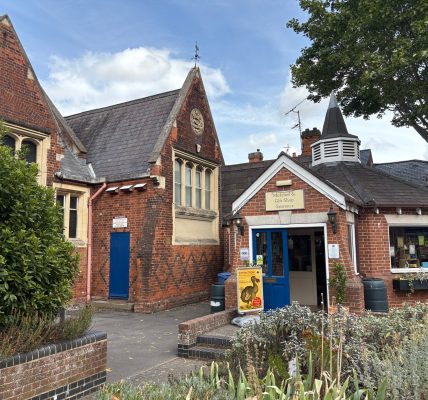
#MuseumMonday: A visit to the Muzeum Farmacji Collegium Medicum Uniwersytetu Jagiellońskiego

In the heart of Kraków, on the busy and historic Floriańska Street, is a museum that offers an unusually intimate journey into the history of medicine, science and everyday life. The Muzeum Farmacji Collegium Medicum Uniwersytetu Jagiellońskiego, or Museum of Pharmacy of the Jagiellonian University Medical College, occupies a historic building but its collections extend far beyond the architecture of the building itself. Spread through twelve exhibition rooms and five levels, the Museum takes visitors from dark medieval cellars to an attic associated with the drying and storage of medicinal plants. In between are reconstructed pharmacy interiors, laboratories, collections of pharmaceutical vessels, mortars and balances, medicinal substances, portraits, books, manuscripts, pharmacy signs and objects associated with some of the most important figures in Polish pharmaceutical history. What makes the Museum particularly successful is that it does not present pharmacy simply as a sequence of scientific discoveries. Instead, it shows pharmacy as a practical profession situated between medicine, chemistry, botany, commerce and everyday life. The objects reveal what pharmacists actually handled: plants, minerals, animal products, chemicals, bottles, jars, scales, presses, distillation equipment and books. They also demonstrate that the history of pharmacy is a history of changing ideas about what constitutes a medicine, where medicines come from, how they should be prepared and how they should be regulated.

The Museum itself has an important history. It was founded in Kraków in 1946 on the initiative of Dr Stanisław Proń, who became its first director. Initially known as the Museum of Pharmacy of the Kraków District Chamber of Apothecaries, it was originally housed at Basztowa 3. During the decades that followed, Proń worked extensively to build its collections, searching throughout Poland for objects associated with pharmacy and apothecary practice. The resulting collection became one of the most important of its kind in Europe. In the late twentieth century the Museum was moved to its present home on Floriańska Street, with the permanent exhibition opening there in March 1991. The Museum was incorporated into the Jagiellonian University in 1993, which has allowed it to maintain scholarly and education activity within the field of the history of medicine. The move was particularly significant because the new building was not simply a neutral container for the collection. Its architecture allowed the Museum to recreate, unusually convincingly, the different spaces in which an historical pharmacy operated. The cellars, rooms and attic can therefore be understood as part of the collection itself. The building helps explain the objects. The Museum occupies a historic fourteenth-century building whose surviving architectural features provide an atmospheric setting for the collections. Rather than beginning with a conventional introductory gallery containing rows of cases, visitors encounter a building whose different levels have been deliberately used to represent different aspects of traditional pharmacy.

This arrangement reflects the practical organisation of an earlier pharmacy. Cellars could provide dark, relatively cool places in which materials such as oils, waxes and medicinal wines could be stored. Laboratories were places where raw materials were processed, distilled, filtered, ground, pressed and otherwise transformed. The main pharmacy rooms were where medicines were stored, prepared and dispensed to customers. The upper parts of buildings, particularly dry and well-ventilated attics, could be used for drying and storing herbs. The Museum therefore turns its architecture into a kind of three-dimensional diagram of pharmaceutical practice. The visitor consequently moves through the history of pharmacy not only chronologically but physically. Descending into the cellars creates an immediate sense of entering the practical and sometimes mysterious world of the early apothecary. Climbing through the building, by contrast, gradually leads towards the more recognisable pharmacy of the nineteenth and twentieth centuries and finally to the botanical world represented by dried medicinal plants. This is important because pharmacy was historically a material profession. Before industrial pharmaceutical production, medicines did not simply arrive in standardised packages from large factories. The pharmacist had to know about materials, judge their quality, store them appropriately and transform them into usable preparations. The Museum’s arrangement makes this process tangible.

The first room that visitors come to contains furniture that mostly originates from monastic pharmacies and pharmacy emblems. These include the lion, eagle and lamb which were popular in medieval Europe due to the import of spices and medicinal raw materials, from countries such as India. The furniture includes corner cabinets from the Pauline pharmacy in Częstochowa which is an important religious destination in the south of Poland, as well as the former Jesuit pharmacy in Kraków. Between these cabinets, there is another which is marked Venena which once held poisons and other potent substances. Across from this stands a gothic cabinet with shelves and drawers which came from the Benedictine pharmacy in Płock (which is in central Poland). Additionally, there is a herb chest in front of this cabinet that comes from the Jesuit pharmacy in Kraków. The room also contains a Biedermeier scales holder from a dozen or so small scales, two renaissance mortars, and other related pharmaceutical equipment. The tenaculum comes from the Kraków pharmacy of the Brothers Hospitallers of St. John of God, represented by the pomegranate, the eight-pointed star, and the double cross at the top of the holder. One of the bronze renaissance mortars, whose handles are shaped like animal heads, comes from 1615. It bears the house mark of pharmacist Jan Radziwin of Kraków, the other was made in 1591. On the table by the window are a wood-framed marble plate and a metal device for making cerates.

The stuffed exotic animals or their body parts that hang from the walls and ceiling include a crocodile, an armadillo, a turtle shell, a pike, a sawfish rostrum, and some strangely shaped fish. They all used to be part of the typical pharmacy décor which can be evidenced by Act 5, Scene 1 in Romeo and Juliet: I do remember an apothecary, And hereabouts he dwells which late I noted, In tattered weeds, with overwhelming brows, Culling of simples. Meager were his looks. Sharp misery had worn him to the bones. And in his needy shop a tortoise hung, An alligator stuffed, and other skins, Of ill-shaped fishes; and about his shelves, A beggarly account of empty boxes, Green earthen pots, bladders, and musty seeds, Remnants of packthread, and old cakes of roses, Were thinly scattered to make up a show.

The Museum’s cellars are among the most evocative parts of the whole exhibition. Here visitors encounter objects associated with the laboratory work of earlier apothecaries, including copper distillation apparatus, retorts, alembics, filters, crucibles, presses and mills. These objects represent the technologies by which medicinal substances were separated, concentrated, purified, extracted and transformed. The pharmacy cellar was used primarily for storing supplies of certain medicines and medicinal raw materials. To a modern visitor, an alembic or retort may look like an early scientific curiosity. In the context of the Museum, however, it becomes evidence of a much broader transformation in human attempts to manipulate natural substances. Distillation was important not simply to chemistry but to pharmacy. It allowed practitioners to produce distilled waters, spirits and other preparations from plant and sometimes animal materials. The apparatus therefore represents an important stage in the development of experimental approaches to medicines. The collection of presses, filters and mills tells a similarly practical story. Plants could be crushed, ground, squeezed or otherwise processed to release substances believed to possess therapeutic properties. The physical actions represented by these instruments (grinding, pressing, heating, filtering and distilling) were fundamental to the preparation of medicines for centuries. The stoneware and copper containers were used to store everything from olive oil, to vinegar, and acids. The barrels kept wine which were needed for the preparation of medicinal wines which were prepared by the pharmacists.

The cellars also evoke another important feature of historical pharmacy: storage. Large vessels, barrels and containers were required for medicinal wines and other preparations. A pharmacy was simultaneously a shop, storehouse, laboratory and place of manufacture. The distinction between the pharmacist and the industrial manufacturer of medicines, so familiar today, simply did not exist in the same form. Some of the materials represented in the collection can appear strange or even disturbing to modern eyes. Historical pharmacy employed substances of plant, mineral and animal origin, and the Museum’s collections include examples of the extraordinary range of materials once regarded as potentially medicinal. These include substances derived from exotic animals, musk, ambergris and other unusual materials, as well as human-derived substances. Such exhibits are important precisely because they challenge modern assumptions. A modern visitor may instinctively distinguish between a scientifically proven drug and a traditional remedy or substance associated with folklore. Earlier pharmacists operated in a very different intellectual environment, in which empirical experience, classical authorities, religious traditions, natural history, humoral theories and emerging chemical knowledge could all coexist. The Museum does not need to endorse these historical practices for them to be historically significant. Instead, the objects demonstrate how the boundaries of legitimate medical knowledge have changed.

The preparation of medicinal wines was practised into the first half of the 20th century. Besides that, wine would be used for cooking, rinsing or macerating medicinal plants. It was also mixed with dry medicines to help make them more palatable for patients. The cellar also has a device for the production of candles, which were mainly produced by pharmacists, as well as selling the coloured wax for letters since the Middle Ages. Apart from those uses, wax (with the additional of certain minerals such as cinnabar) served the production of medicines such as ointments in the pharmacy. The cupboard in the corner holds a collection of mineral water containers, which were used to store natural as well as artificial mineral waters, which were popular in 19th century pharmacies. Next to the cupboard are decorative ceramic water filters made by the German company Berkefeld. Under the stairs is the poison cabinet, which were often kept away from other substances and marked especially as a warning. The old pharmacies were known for the fact that one could also buy, among others, various types of alcohol, sweets, and other goods. Reference to these have also found their way into literature such as that by Polish baroque poet Jan Andrzej Morsztyn.

The second cellar houses old laboratory equipment, such as presses for extracting juices and oils, grinders, mortars, crucibles, as well as distillation apparatus. To me, it seemed like a fun place to work in and the amount of old glassware within was enough to excite my inner nerd quite a bit. This area also contains a sign which displays the Alchemical Laboratory by Jan van der Straat (1523–1605). Van der Straat produced a number of images of scientific and technological activity in Renaissance Florence. His are particularly revealing because this work presents alchemy not simply as a mysterious or occult pursuit, but as a practical, highly organised form of experimental work. The laboratory itself is shown as a remarkably busy workplace. Numerous figures are engaged in different stages of experimentation, surrounded by furnaces, vessels, flasks, tubes and other pieces of apparatus. Rather than presenting the alchemist as a solitary magician contemplating a secret formula, Van der Straat depicts a collaborative environment in which practical manual work and intellectual investigation occur together. This is particularly significant because Renaissance alchemy occupied an uncertain position between what we would now distinguish as chemistry, medicine, pharmacy, metallurgy and natural philosophy. The laboratory therefore represents a place where knowledge was produced through both observation and manipulation of the material world.

The small room across from the entrance to this room contains two 17th century graphite retorts, which were used for dry distilling. This was performed at high temperatures in an environment that had an absence of air. There retorts are contemporary to Michael Sendivogius (1566–1636), also known as Michał Sędziwój, who was one of the most influential alchemists of the late sixteenth and early seventeenth centuries. His most famous work, Novum lumen chymicum (A New Light of Alchemy), first appeared in Prague in 1604 under the title De lapide philosophorum tractatus duodecim. It became extraordinarily popular, with more than fifty editions and translations appearing before 1800. The work was based upon what Sendivogius described as the “fountain of Nature” and “manual experience”, reflecting his conviction that alchemical knowledge should arise from the observation and practical investigation of nature rather than simply from the authority of earlier writers. The New Chemical Light is structured around a series of treatises dealing with the nature and generation of metals, the elements and the principles of alchemical transformation. Sendivogius placed particular importance on Mercury, Sulphur and Salt, and on the role of a subtle substance associated with air and life. His accompanying Treatise on Sulphur, published in 1616, explored Sulphur as one of the fundamental principles involved in the formation and transformation of metals. Together, these writings attempted to provide a coherent explanation of how Nature produced metals within the Earth and how the alchemist might reproduce or accelerate such processes in the laboratory. The works are particularly interesting today because they occupy a position between traditional Hermetic alchemy and the increasingly experimental approach to matter that would contribute to the development of early modern chemistry.

Along the stairs that leads to the first floor are a statue of Hygieia (the Greek goddess of health), large decorative glass containers filled with colourful liquid, which were formerly displayed in pharmacy windows for decoration, and a stained glass door depicting a mortar surrounded by medicinal plants: digitalis (Digitalis purpurea), aconite (Aconitum napellus), opium poppy (Papaver somniferum), and belladonna (Atropa belladona) at the bottom. On the wall next to the door hangs a wooden board with a quotation from Ovid’s poem Remedia Amoris (Remedies for Love), which states that patients must take medicines the moment they fall ill and not wait until the disease spreads. The walls of the staircase at the first, second, and third floor carry diplomas, to emphasise the fact that pharmacists, who were once craftsmen, are now university educated, as a result of a change that began in Europe at the turn of the 19th c. The green wall along the stairs that lead from the second floor to the third one is devoted to the first Council of the Faculty of Pharmacy at the Jagiellonian University, which marked the be- ginning of pharmacy as an independent subject within university structure.

The first room you come to upon the landing at the top of the stairs contains furniture and equipment from a pharmacy run by the families of Barański and Moszczeński of Lesko (south-east Poland). The Empire furniture comes from the first half of the 19th century. The shelves hold amphora-shaped containers made of vitreous china, with handles shaped like ram heads, which come from the Ćmielów factory (one of Poland’s oldest ceramics producers), as well as Baroque jars, made of milk glass and decorated with alchemical symbols (top shelves). The counter holds an Empire table scales, a marble mortar with a wooden pestle, a machine form making pills and a wooden box to gilding them, and a white porcelain container inscribed Hirudines, in which live leeches were stored. On the stand there is a prescription register from the St. Lazarus Hospital pharmacy in Kraków, covering the years 1828-1840. The portraits show professors of pharmacy (including Jan Szaster, who held Poland’s first Chair of Pharmacy and Materia Medica, established in 1783 at the Jagiellonian University) and presidents of the General Assembly of the Pharmacists of Po- land (at the bottom). The portrait above the door, authored by eminent Polish painter Jacek Malczewski, is of Adam Łobaczewski, Professor of Pharmacognosy at the Jagiellonian University from 1924 to 1928. By the middle window is a sitting weighing scales (19th century).

The Museum also contains a remarkable collection of pharmacy emblems and signs. These objects provide a window into the visual culture of earlier pharmacies, when a sign could be an essential means of identifying an establishment. Some of these symbols now seem mysterious. The Museum’s collections include, for example, pharmacy emblems associated with exotic peoples and animals. The figure of a black person, or ‘Murzyn’, was associated with the exotic medicinal substances imported from distant parts of the world during the late medieval and Renaissance periods. Other traditional pharmacy imagery involved animals, plants and objects whose symbolism had developed over centuries. These objects demonstrate that pharmacies were not purely scientific spaces. They occupied a position within urban commercial culture. A pharmacy had to attract customers and communicate trustworthiness, expertise and access to unusual or valuable substances. The visual culture of pharmacy also reflects the historical fascination with the natural world. Animals that now seem unrelated to medicine could appear in apothecary decoration because their bodies or products were historically considered medicinal. The Museum therefore provides a fascinating intersection between pharmaceutical history and the history of natural history. On the left-hand wall of the passage hangs the degree certificate of Sister Konstancja Studzińska. Studzińska and her sister Filipina enrolled as extramural students at the Jagiellonian University to become the first women in the world to earn a university degree in Pharmacy (in 1824). Next to the certificate hang photographs of first regular female students (end of the 19th century). The portrait on the opposite wall shows Antonina Leśniewska, who set up the first women’s school for pharmacy assistants (1901). The photograph below shows some of its students in class.

One thing that visitors may notice moving upwards through the Museum, is that you start to encounter an extensive collection of pharmacy furniture. These pieces range from Baroque and Empire styles to Biedermeier, neo-Baroque and eclectic forms. The furniture is significant because it demonstrates how the physical organisation of pharmacies changed alongside the profession itself. Cupboards, drawers and counters were essential working equipment. A pharmacist needed to organise ingredients systematically and protect them from contamination, deterioration and misuse. A cabinet containing dozens of labelled drawers was therefore not simply furniture; it was part of the pharmacist’s information-management system. The furniture also conveys something about the social status of pharmacy. Apothecaries were members of an educated urban profession, and successful pharmacies could possess elaborate interiors. The transition from Baroque decoration to Empire, Biedermeier and later styles also provides a visual chronology, allowing visitors to see broader changes in European taste reflected within the pharmacy. In this respect, the Museum is as much a museum of interiors as it is a museum of medicines. It shows that the history of pharmacy took place in particular physical environments.

The next room that visitors come to room, has a ceiling is covered with 18th century decorative paper (koftryna), and features furniture in neo-Baroque and Biedermeier styles. The former is represented by the cabinet on the left, with its spiral columns, mirrors, and intricately carved detail; the latter by the cabinets and the prescription counter opposite. In the middle of the room there are marble and bronze mortars together with original lids and holders. By the window stands a neo-Baroque scales with horn bowls. The statue by the door is of Asclepius, the Greek god of medicine, also known under the Latin name of Aesculapius. The stained glass work in one of the windows depicts Asclepius and his daughter Hygieia, the goddess of health. To the left of the entrance door there is a reproduction of the painting entitled ‘Apotheke in Lauenstein’ by a German painter Robert Sterl (1867–1932). On the right side of the room there is a small vaulted room where the 19th century wall painting shows a stylised garden. The room features mortars and scales, the most striking of which is the gilded neo-Baroque scales standing across from the en- trance. The glass cabinet on the right holds Danish crockery made in Copenhagen at the turn of the 19th century (an example of so called Flora Danica). The narrow corridor, which features elements of Classicist furniture, leads to the Ignacy Łukasiewicz room.

Among the most immediately recognisable pharmaceutical objects throughout the Museum are mortars and balances. These may appear simple, but they represent the central importance of measurement and preparation in traditional pharmacy. The mortar was an essential tool for reducing substances to powders and mixing ingredients. Different materials and sizes of mortars reflect the range of substances being processed. The balance, meanwhile, embodies the pharmacist’s responsibility for accurate measurement. Before the modern pharmaceutical industry, many medicines had to be compounded individually. The pharmacist’s skill therefore mattered enormously. A medicine was not merely selected from a shelf; it might have to be measured, mixed, dissolved, ground, filtered or otherwise prepared. These tools therefore help explain why the historical pharmacist was simultaneously a shopkeeper, chemist, botanist and craftsman. The professional identity of the pharmacist emerged from precisely this combination of practical and intellectual skills.

One of the Museum’s most extensive collections consists of pharmaceutical vessels from different historical periods. These include examples made from wood, tin, glass, faience and porcelain. Their importance extends beyond their aesthetic qualities. A vessel can tell us what was stored in it, how it was stored, what terminology was used for medicines and how the pharmacy organised its stock. Labels are particularly valuable because they preserve historical names for substances and preparations. Changes in terminology can provide evidence of changing medical knowledge. A substance that was once identified according to a traditional or botanical name may later acquire a chemical designation. Thus the apparently simple pharmacy jar can document the transition from traditional materia medica to modern pharmacology. The vessels also provide evidence for the international nature of pharmacy. Medicines and medicinal ingredients were traded across enormous distances. Exotic substances entered European pharmacies through complex networks of commerce and empire. The presence of unusual ingredients and specialised containers consequently reflects a much larger history of global trade.

Among the most significant individuals represented in the Museum is Ignacy Łukasiewicz (1822–1882), the Polish pharmacist, pioneer of the petroleum industry and inventor associated with the development of the kerosene lamp in 1853. Łukasiewicz is an especially appropriate figure for a pharmacy museum because his career illustrates how nineteenth-century pharmacy could intersect with chemistry, industry and technological innovation. The Museum preserves objects and documents associated with him, including an inventory connected with the pharmacy at Brzostek. Research into the collection has shown that the inventory provides evidence about the organisation and equipment of a provincial pharmacy in the second half of the nineteenth century. The writing desk and the medicine chest come from Łukasiewicz’s family home (shown in one of the watercolors), which was located in the Podkarpacie region (south-east Poland). The desk holds a hand-written pharmaceutical manual and a copy of the prototype of Łukasiewicz’s lamp. The three glass retorts standing on the glass cabinet contain crude oil (Oleum petrae crudum) from Galicia (Eastern Europe), purified oil from southern Austria (Oleum petrae album), which in the 19th century was used against frostbite, and kerosene Łukasiewicz obtained through fractional distillation.

Among the photographs there is a portrait of Jan Zeh, a pharmacist who worked with Łukasiewicz on developing the distillation method, and photographs of the front and the interior of the Pod Gwiazdą pharmacy in Lviv, run by Piotr Mikolasch, where Łukasiewicz and Zeh worked. The Łukasiewicz material broadens the visitor’s understanding of what a pharmacist could be. The pharmacist was not necessarily confined to dispensing medicines. Pharmaceutical training could provide a foundation for experimentation with materials and chemical processes that had consequences far beyond medicine. His presence in the Museum therefore helps connect the history of pharmacy with the history of modern industry.

The next room on the visitor’s journey contains pharmaceutical vessels as well as raw materials of animal and mineral origins. The Roman unguentaria, that is glass and clay containers that would hold scents, oils, balms and the like, are the earliest utensils on display. They are shown in case II, which also holds a collection of jars with diagonal labels and two-coloured lettering as well as two monstrance-shaped containers, all of which come from the Cieszyn pharmacy of the Brothers Hospitallers of St. John of God (southern Poland). Cases III and IV hold containers made of coloured glass: cobalt, green, ruby-coloured, black, white, and brown (orange) ones. The two cases in the middle of the room (V and VI) contain maiolica of Italian, Dutch, French, and British origin, which was presented to the Museum by Mateusz Grabowski, a London-based Polish pharmacist. Case VII shows Polish ceramics, represented by porcelain and vitreous china from Baranówka, notable for the folk ornamentation of the cartouches (first half of the 19th century), faience jars from Tomaszów Lubelski, Prószków, Koło, and Lubartów, as well as items from the Ćmielów factory. Case VIII holds products of other European factories, including Meissen, Berlin, and Vienna. One of the two glass cabinets by the windows contains exhibits connected with two antidotes, whose popularity persisted from antiquity to the end of the 18th century: theriac, which consisted (among others) of dried powdered viper meat, opium, and mithridate.

In the same room, cases IX-XII contain animal derived medicines together with their containers: mummy (Mumia vera), human fat (Axungia hominis), human skull (Cranium humanum), ox bile (Fel Tauri), bull’s blood (Sanguis bovis), calf’s stomach (Stomachus vitulinus), powdered cockroaches (Blattae orientales), centipedes (Millepedes), Spanish flies (Cantharides), red coral (Corallum rubrum), crab’s stones (Lapides cancrorum), powdered oysters (Conchae praeparatae), sea sponges (Spongiae marinae), castoreum (Castoreum), musk (Zibethum), bezoar (Bezoar orientalis), earthworm oil (Oleum lumbricorum), and leeches (Hirudines). Cases XIII and XIV hold materials and mineral derived medicines, such as kaolinite (white and red), hematite, lazurite, orpiment, sulphur, chalcanthite, talc, and antimony, which was used in the 17th and 18th centuries to make reusable laxative pills, known as ‘everlasting pills’ (Pilulae perpetuae).

The final room before reaching the attic is perhaps my favourite due to all of the scientific instruments on display. The portrait over the entrance shows pharmacist Maria Bobrzecka, owner of a pharmacy in Brzeszcze (a town in the vicinity of Auschwitz), who went under cover to help prisoners of the Nazi concentration camp. To the left of the door is a section of the philatelic collection, including stamps and First Day Covers (FDC), illustrating the history of pharmacy. While in the same room, on the left, the on two boards, antique medical texts, held in the Museum library, are displayed. Case I holds measuring devices and hand scales together with weights, as well devices for the administration of medications. The case nearby (case II) displays pharmacopoeias, herbals, and royal privileges, i.e. documents that granted pharmacists the right to go into business. Cases III and IV contain portable medicine chests (among others homeopathic medicine chests), decorative pennant and shaped prescription copies, containers, labels, advertisements, as well as items related to small-scale pharmaceutical production (own products)and the beginnings of the pharmaceutical industry. The case opposite (case V) holds devices for making pills, tablets, and capsules, as well as pill silverers and crocodile-shaped presses for flattening corks. Case VI contains physical and chemical apparatuses (alcoholmeters, aerometers, polarimeters, thermometers, and microscopes, including a wooden microscope from the turn of the 19th century) and the like.

The Museum also addresses one of the most poignant episodes in Kraków’s pharmaceutical history: the experience of Tadeusz Pankiewicz, who operated the Pod Orłem Pharmacy in the Kraków ghetto during the German occupation. Pankiewicz’s story demonstrates that a pharmacy can become much more than a place where medicines are dispensed. During the occupation, the pharmacy became a place through which information, assistance and medicines could pass in circumstances of extreme danger. The Museum’s attention to Pankiewicz places pharmaceutical history within the wider social and political history of the twentieth century. This is an essential dimension of the Museum’s story. The history of pharmacy is not merely a history of substances and instruments. Pharmacists work within societies, and their professional responsibilities can become particularly significant during periods of crisis. Pankiewicz’s story consequently provides a powerful reminder of the ethical dimension of healthcare professions.

Objects alone cannot tell the complete history of pharmacy. The Museum therefore places considerable importance on books and manuscripts. Its holdings include herbals, antidotaria, pharmacopoeias, pharmacy textbooks, official and unofficial drug lists and handwritten pharmaceutical manuals. The collection also includes an important Greek-Latin edition of the complete works of Hippocrates. These books reveal how pharmaceutical knowledge was transmitted. For centuries, an apothecary’s knowledge was dependent upon texts as well as practical experience. Herbals provided descriptions and illustrations of plants. Formularies and antidotaria gave recipes and instructions. Pharmacopoeias increasingly attempted to standardise medicines, their ingredients and their preparation. This development towards standardisation is one of the most important themes in the history of pharmacy. The modern expectation that a medicine should have a defined composition, dosage and method of preparation did not emerge overnight. It developed through centuries of accumulated knowledge, experimentation, regulation and professionalisation. The Museum’s historic books therefore represent more than old literature. They are records of changing systems of knowledge.

The Museum also explores the relationship between pharmacy and higher education. Portraits of important early professors of pharmacy at the Jagiellonian University include Jan Szaster, Józef Sawiczewski and Florian Sawiczewski. Portraits of senior members of the Kraków apothecaries’ guild further emphasise the relationship between academic and professional pharmacy. These portraits are important because they humanise the history of the profession. Pharmacy was not developed solely by anonymous processes of scientific progress. It was shaped by particular individuals who taught, experimented, regulated and practised. The presence of these portraits within reconstructed pharmacy interiors also makes a broader point: the development of pharmacy involved the gradual transformation of practical knowledge into an organised profession supported by education. This connection remains central to the Museum itself. As part of the Jagiellonian University Medical College, the Museum is not simply a historical attraction. Its collections have educational value for students and researchers studying pharmacy, medicine and the history of science.

An especially important part of the Museum is the exhibition devoted to what remains of historic Kraków pharmacies. Entitled “What is left of ancient Krakow’s pharmacies”, it preserves objects, signs, packaging, advertisements and other surviving evidence from pharmacies that have disappeared or changed beyond recognition. This section is important because it shifts the emphasis from the history of pharmacy in general to the history of pharmacy as it was experienced in Kraków. A pharmacy is an unusually fragile historical institution. Its furniture can be replaced, its premises renovated, its owners changed and its products discarded. Unlike a monumental building, an ordinary pharmacy may leave very little trace once it closes. Objects rescued from such establishments therefore become fragments of urban history. Pharmacy packaging and advertising are particularly revealing. They demonstrate how medicines were marketed to the public and how pharmaceutical businesses communicated with their customers. Decorative typography, illustrations and slogans reveal changing ideas about health, beauty and modernity. The exhibition therefore connects pharmacy with the history of commerce and advertising, while also documenting the changing appearance of Kraków itself.

At the opposite end of the Museum from the dark cellars is the attic. Its inclusion in the exhibition is particularly appropriate because dry, well-ventilated attics historically provided suitable conditions for drying and storing medicinal plants. The attic brings visitors back to one of the oldest foundations of pharmacy: the use of plants as medicines. For much of human history, knowledge of medicinal plants was fundamental to healthcare. Before the isolation and synthesis of individual active compounds, plants were used as complex mixtures. Leaves, flowers, roots, bark, seeds and fruits could all be collected and processed. The dried specimens and botanical materials represented in the Museum therefore connect pharmacy to botany and pharmacognosy, the study of medicinal substances obtained from natural sources. They also help explain why pharmacists historically needed botanical knowledge. Correct identification of a medicinal plant could be a matter of considerable importance. Confusing one species with another could affect the properties of a preparation and, in some cases, have serious consequences. The attic thus completes the Museum’s journey. After seeing medicines being stored, processed, measured and dispensed, visitors encounter the natural materials from which many of them originated.

Taken as a whole, the galleries demonstrate a fundamental transformation in the history of pharmacy: the gradual movement from a largely natural-material-based materia medica towards a discipline increasingly founded on chemistry and pharmacology. This should not be understood as a simple transition from ‘old’ and supposedly irrational pharmacy to ‘modern’ and rational pharmacy. Historical pharmacy was more complicated. Apothecaries experimented, observed, measured and developed sophisticated practical knowledge. At the same time, ideas that are no longer accepted scientifically remained influential. The Museum’s objects allow these different traditions to be seen side by side. A medicinal plant, a seventeenth-century herbal, an alembic, a pharmaceutical vessel, a mortar, a balance and a nineteenth-century pharmacy interior all represent different components of the same historical process. Together they show how pharmaceutical knowledge accumulated and changed. Perhaps the greatest strength of the Museum is that its objects retain evidence of use. A mortar has physical traces of the activity for which it was made. A bottle reveals how a substance was stored. A cabinet demonstrates how ingredients were organised. A balance shows the importance of measurement. A handwritten recipe records knowledge transmitted between practitioners. A pharmacy sign identifies a business within the urban landscape. A portrait places a particular individual within the development of the profession. Seen individually, these objects can seem modest. Seen collectively, they become a remarkably detailed record of a vanished world.

The Museum also reminds visitors that pharmaceutical history is fundamentally a history of material culture. Scientific ideas require physical technologies through which they can be tested and applied. Knowledge about a medicinal plant is transformed when that plant is dried, ground, extracted, distilled, weighed and incorporated into a preparation. The objects in the Museum document precisely these transformations. The Muzeum Farmacji is therefore valuable not simply because it contains old pharmaceutical objects, but because it makes visible the changing relationship between humans and medicines. The earliest parts of the collection reflect a world in which medicines were derived extensively from nature and prepared locally. The laboratory equipment shows the increasing importance of processes such as distillation and extraction. The books reveal the growth of written and standardised pharmaceutical knowledge. The pharmacy furniture demonstrates professionalisation and changing social expectations. The nineteenth-century material reflects the growing influence of chemistry and industry. The twentieth-century material demonstrates the transformation of pharmacy into the highly regulated scientific profession familiar today. At the same time, the Museum preserves the cultural history surrounding medicines. Pharmacy was connected to religion, commerce, education, natural history, art, architecture and urban life. Its objects therefore tell stories far beyond the technical preparation of drugs.

A visit to the Muzeum Farmacji Collegium Medicum Uniwersytetu Jagiellońskiego is, in effect, a journey through several centuries of changing human attempts to understand, prepare and administer medicines. Its twelve exhibition rooms take visitors from the cellars, with their barrels, vessels and laboratory apparatus, through reconstructed pharmacy interiors and collections of furniture, ceramics, glassware, mortars and balances, to portraits, books, manuscripts and evidence of Kraków’s historic pharmacies before finally reaching the attic and its association with medicinal plants. The Museum’s greatest achievement is the way it places these objects within a coherent environment. Instead of presenting pharmaceutical history as a collection of isolated inventions, it reconstructs the world in which pharmacy was practised. The cellars demonstrate storage and laboratory work. The pharmacy interiors reveal the organisation and appearance of the profession. The vessels and furniture show the practical and commercial dimensions of dispensing medicines. The books demonstrate the accumulation and standardisation of knowledge. The portraits introduce the people who shaped pharmacy as a profession. Łukasiewicz illustrates the potential of pharmaceutical knowledge to contribute to wider scientific and industrial innovation. The Kraków pharmacy material places the history of the profession within the life of the city, while Tadeusz Pankiewicz’s story demonstrates that pharmacy can acquire profound social and ethical significance during times of crisis.

Perhaps most importantly, the Museum encourages visitors to recognise how unfamiliar the pharmacy of the past could be. Substances once considered medicines may now appear strange, while objects that look decorative may have been essential working tools. Conversely, familiar practices such as weighing, labelling, storing and compounding medicines have deep historical roots. The Museum therefore tells a story not of a single moment when pharmacy became ‘modern’, but of a long process of experimentation, observation, professionalisation and scientific change. Its collections reveal how pharmacists gradually moved from working primarily with whole natural substances towards increasingly precise chemical and pharmacological knowledge, while retaining important connections with botany, medicine and the wider natural sciences. The historic building is consequently more than a backdrop. Its cellars, rooms and attic allow visitors to understand how pharmacies themselves were organised, while the objects within them provide the evidence from which that history can be reconstructed. The result is an unusually immersive museum in which architecture, material culture and scientific history reinforce one another.

For anyone interested in the history of medicine, chemistry, botany or natural history, the Museum offers an opportunity to see how these disciplines once overlapped within the everyday work of the apothecary. For those interested in Kraków, it provides another perspective on the city’s social and commercial history. And for pharmacists, it offers something even more personal: an opportunity to see the tools, texts, spaces and people from which their modern profession developed. Ultimately, the significance of the Muzeum Farmacji lies in its ability to make an abstract history tangible. The history of pharmacy can easily be reduced to a list of medicines, discoveries and famous scientists. In Kraków, however, that history can be touched (at least visually) in the worn surfaces of a mortar, the shape of an eighteenth-century medicine jar, the compartments of an apothecary cabinet, the pages of an old pharmacopoeia or the elaborate decoration of a pharmacy interior. Together these objects tell a much larger story: the story of humanity’s continuing search for substances capable of preventing disease, relieving suffering and restoring health. They also tell the story of how our understanding of those substances has changed. From herbs and minerals to distilled preparations, from handwritten recipes to pharmacopoeias, and from the individual apothecary to modern pharmaceutical science, the Museum provides a remarkable material record of one of the oldest and most consequential branches of healthcare. In that sense, the Muzeum Farmacji is not simply a museum about pharmacies. It is a museum about knowledge, experimentation, medicine and society, preserved through the objects that made pharmaceutical practice possible. Thank you to the knowledgeable staff for answering my questions and to the Museum for providing handy guides throughout. some of which I used to help put the blog post together. If you can’t make it to the Museum, then perhaps you’ll enjoy this helpful virtual tour!


If you liked this post and enjoy reading this blog, please consider supporting me on Patreon where you will also gain access to exclusive content. If you enjoy reading my blog, why not subscribe using the form below?