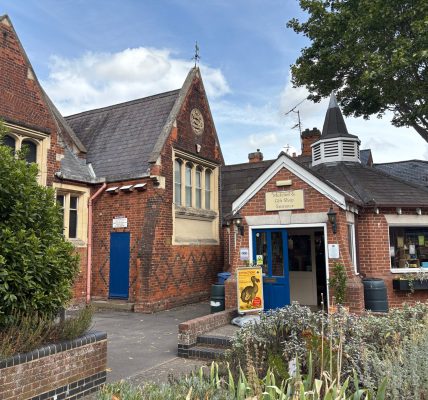
The St Bartholomew’s Hospital Museum is one of the most significant medical history museums in the United Kingdom. Located within the grounds of St Bartholomew’s Hospital in West Smithfield, London, the Museum explores nearly nine centuries of medical care, scientific progress, and social change. Through historical artefacts, documents, artworks, and archives, it tells the story of how one of Britain’s oldest hospitals evolved alongside the development of modern medicine. The Museum is housed in the historic North Wing of the hospital complex and forms part of a wider heritage site that includes the Great Hall and the famous Hogarth Staircase. Together, these spaces preserve the legacy of a hospital that has provided care to Londoners since the medieval period. The Museum’s purpose is not only to display objects from the past but also to help visitors understand how medicine, healthcare systems, and hospitals have changed over time. By presenting objects used by surgeons, nurses, and apothecaries alongside archival records and works of art, the Museum provides insight into both the scientific and human stories behind healthcare.

To understand the Museum, it is important to understand the long history of the hospital itself. St Bartholomew’s Hospital, commonly known simply as ‘Barts’, was founded in 1123 by Rahere, a courtier of King Henry I who established a religious community and hospital to care for the sick and poor. Over time, the institution became one of the most important centres for medical care in England. During the Middle Ages, hospitals were often linked to religious institutions, and care was provided mainly by monks or religious workers. Patients were treated not only for physical illnesses but also for spiritual wellbeing. The hospital survived major historical events including the Black Death, the dissolution of the monasteries under Henry VIII, the Great Fire of London, and the growth of modern scientific medicine. As medicine advanced during the eighteenth and nineteenth centuries, the hospital developed into a major teaching institution. Many important doctors and surgeons trained or worked there, and the hospital became closely connected with medical education in London. The Museum today preserves this long institutional memory, documenting the transformation of medical practice from medieval charity to modern scientific healthcare.

The Museum is situated in the North Wing of St Bartholomew’s Hospital, a historic building constructed in the eighteenth century. The wing forms part of a grand square designed by the architect James Gibbs, whose work contributed significantly to the architectural character of the hospital. The building itself is considered an important heritage site. Its architectural features include the Great Hall with its decorative ceiling and the Hogarth Staircase. These spaces combine artistic and medical heritage, showing how hospitals in earlier centuries also served as cultural institutions supported by charitable donations. Visitors entering the Museum pass through historic corridors that have been used by generations of doctors, nurses, and patients. This physical connection to the past gives the Museum a unique atmosphere compared with many other historical Museums.

St Bartholomew-the-Less is a small but historically significant parish church located within the grounds of the hospital. Despite its modest size, it has played an important role in the religious, medical, and social life of the hospital community for centuries. Closely linked with the larger and more famous St Bartholomew-the-Great nearby, St Bartholomew-the-Less serves as the parish church for the hospital and reflects the long-standing connection between faith and healthcare. The church dates back to the 12th century, founded around the same time as the hospital itself by Rahere. Originally, the religious complex included both a priory and a hospital, with separate spaces for worship and care. St Bartholomew-the-Less was established specifically to serve the spiritual needs of patients and staff within the hospital. In medieval times, religion was deeply intertwined with medicine, and prayer, confession, and spiritual healing were considered essential parts of treatment. The current structure largely dates from the 18th and early 19th centuries, with significant rebuilding carried out under the architect George Dance the Younger between 1789 and 1793. The simplicity of the interior reflects the church’s functional role within a hospital setting, while still maintaining an atmosphere of calm and reflection.

The establishment of St Bartholomew’s Hospital in 1123 was made possible through a series of royal and ecclesiastical grants that provided land, income, and legal authority. These grants were essential in transforming the vision of its founder, into a functioning institution that could care for the sick and poor in medieval London. The most important early grant came directly from Henry I, who issued a royal charter allowing Rahere to found the institution on land in Smithfield, just outside the medieval walls of London. This charter not only provided the physical site but also gave the hospital legal recognition and protection under the Crown. Royal grants in the 12th century were crucial for new institutions, as they ensured legitimacy and often included privileges such as exemption from certain taxes or the right to hold markets and collect rents. In the case of St Bartholomew’s Hospital, the king’s support enabled it to function as both a धार्मिक and charitable foundation. The hospital was closely linked to the adjoining priory, and its operation depended on a combination of spiritual mission and financial stability. In addition to royal backing, the hospital benefited from grants made by nobles, clergy, and wealthy citizens of London. These benefactors donated land, money, and goods to support the hospital’s work. Such endowments were common in medieval society, where acts of charity were believed to contribute to the donor’s spiritual salvation. By giving to the hospital, donors hoped to secure prayers for their souls and demonstrate their piety. Land grants were particularly important because they provided a steady source of income. The hospital could lease out land or collect rents from tenants, generating funds to support its daily operations.

Although the hospital dates back to the twelfth century, the Museum itself is relatively modern. It was established in the late twentieth century to preserve the hospital’s collections and make them accessible to the public. The Museum uses objects and records from the extensive archives of the Barts Health NHS Trust to tell the story of healthcare in the City of London. The Museum has undergone several periods of renovation and redevelopment. In the early 2020s, the North Wing complex was restored through a heritage project designed to preserve its architecture and improve visitor access. The Museum was temporarily closed during these restoration works and later reopened as part of a wider heritage initiative that also restored historic artworks and architectural features. The redevelopment aimed to improve the interpretation of the hospital’s history and provide better exhibition spaces for the Museum’s collections.

The Refoundation Charter of 1546 was a crucial document in the history of St Bartholomew’s Hospital, ensuring its survival during a period of major religious and political upheaval in England. Issued by King Henry VIII, the charter re-established the hospital as a royal institution after the dissolution of the monasteries, marking a transition from medieval religious care to a more secular, civic model of healthcare. Before the Reformation, St Bartholomew’s Hospital had been closely tied to the Augustinian priory of St Bartholomew-the-Great. The priory and hospital were part of the same religious foundation, and much of the hospital’s funding and administration came through monastic structures. However, during the 1530s, Henry VIII broke from the authority of the Roman Catholic Church and initiated the dissolution of monasteries across England. As a result, the priory was dissolved in 1539, and the hospital temporarily ceased to function in its traditional form. The closure of religious institutions created a crisis in healthcare provision, particularly in cities like London where hospitals had played a vital role in caring for the poor and sick. Recognising this problem, the City of London petitioned the king to restore key hospitals. In response, Henry VIII granted the Refoundation Charter in 1546, re-establishing St Bartholomew’s Hospital as a royal hospital under civic administration. The charter transferred responsibility for the hospital to the Corporation of the City of London, effectively placing it under municipal rather than religious control.

The St Bartholomew’s Hospital Museum houses a wide variety of historical objects relating to healthcare and medical practice. The collections cover more than 800 years of medical history and include thousands of items ranging from surgical tools to manuscripts. One of the most striking parts of the Museum is its display of historical surgical instruments. These objects demonstrate how surgery was performed before the development of modern anaesthesia and antiseptic techniques. For example, the Museum holds amputation instruments belonging to the surgeon John Abernethy, who worked at the hospital in the early nineteenth century. Such tools illustrate how operations were once carried out quickly and often under extremely difficult conditions. By examining these instruments, visitors can appreciate the dramatic advances that have taken place in surgical technology and patient care. The role of the physician at St Bartholomew’s Hospital underwent significant transformation in the period following the work of William Harvey in the 17th century. Harvey’s discovery of the circulation of the blood in 1628 marked a turning point in medical science, challenging long-held beliefs derived from ancient authorities such as Galen. In the decades that followed, physicians at St Barts increasingly combined traditional learning with observation, experimentation, and clinical practice, reshaping their role within the hospital. Before Harvey, physicians were primarily scholars who relied heavily on classical texts and theoretical knowledge. Their role was largely diagnostic: they would assess patients, determine the nature of an illness according to established humoral theories, and prescribe treatments, which were then prepared by apothecaries. Direct physical involvement with patients was often limited, as manual procedures were typically carried out by surgeons, who were considered a separate and less prestigious profession. After Harvey’s work gained recognition, physicians began to place greater emphasis on observation and the study of the human body.

At St Bartholomew’s Hospital, this shift encouraged a more hands-on approach to medicine. Physicians increasingly engaged in bedside practice, observing symptoms carefully and tracking the progress of diseases over time. This marked the early development of clinical medicine, where diagnosis and treatment were informed by direct experience rather than solely by inherited theory. The physician’s role also became more closely linked with scientific inquiry. Harvey himself had been associated with St Bartholomew’s Hospital, and his influence helped promote a culture of investigation and intellectual curiosity. Physicians began to question traditional explanations of disease and sought new ways to understand bodily functions. This period saw the gradual decline of the humoral theory and the rise of more evidence-based approaches to medicine. In addition to their clinical duties, physicians at St Barts played an important role in medical education. The hospital became an increasingly important site for training new doctors, who learned by observing experienced physicians and participating in patient care. This apprenticeship-style learning was crucial in spreading new ideas and practices influenced by Harvey’s discoveries. Despite these changes, the physician’s role remained distinct from that of other medical practitioners. Physicians continued to hold a higher social status than surgeons and apothecaries, reflecting their university education and theoretical expertise. However, the boundaries between these roles began to blur as practical knowledge became more valued. Physicians were now expected not only to diagnose but also to understand the mechanisms of disease and the effects of treatment.

Although surgery had long been practised as a separate and more manual branch of medicine, developments in scientific understanding during the 17th and early 18th centuries began to improve both its methods and its status. Before this time, surgery was often carried out by barber-surgeons, who relied on practical skill rather than formal education. Procedures such as amputations, wound treatment, and the draining of abscesses were performed without anaesthesia and with limited knowledge of infection. As a result, surgery was dangerous and often a last resort. However, the growing emphasis on observation and anatomy (encouraged by Harvey’s work on the circulation of blood) helped surgeons better understand the human body. At St Bartholomew’s Hospital, this led to more careful and informed surgical practice. Surgeons began to study anatomy through dissection, improving their knowledge of internal structures and making procedures more precise. The understanding of blood circulation also allowed surgeons to manage bleeding more effectively during operations, which was a major step forward in patient survival. During this period, the status of surgeons slowly began to rise. Although they were still considered inferior to physicians, their increasing expertise and the complexity of their work earned them greater respect within the hospital. Institutions such as Company of Barber-Surgeons contributed to the organisation and regulation of the profession, encouraging higher standards of training and practice.

The Museum also displays equipment used by apothecaries, who were responsible for preparing medicines before the development of modern pharmacies. These artefacts include pill-making machines, scales, measuring instruments, and medicine bottles. These objects highlight the early stages of pharmaceutical science. In medieval hospitals such as St Barts, medical care was a combination of spiritual support and practical treatment. Apothecaries were central to this system because they provided the remedies used to treat disease. Using knowledge derived from classical texts and herbal traditions, they prepared medicines from natural ingredients such as plants, minerals, and animal products. These remedies could take the form of powders, ointments, syrups, or pills, all carefully measured and mixed by hand. The importance of apothecaries increased significantly during the early modern period, particularly from the 16th and 17th centuries. As medicine began to shift toward a more scientific basis, apothecaries became more skilled and specialised. At St Barts, they worked within the hospital to ensure that patients received consistent and appropriate treatments. Their role required both practical expertise and a deep understanding of materia medica, the study of medicinal substances. A key development in the professionalisation of apothecaries was the establishment of the Worshipful Society of Apothecaries in 1617. This organisation helped regulate the training and practice of apothecaries in London, ensuring standards of quality and competence. Many apothecaries associated with St Barts would have been influenced by or connected to this body, reflecting the growing importance of regulation in medical professions. The displays demonstrate how medical treatments evolved as scientific knowledge increased.

By the 18th century, this informal system of education had become more organised. Surgeons and physicians began offering lectures and demonstrations to students, particularly in anatomy and surgery. Dissection became an essential part of medical training, allowing students to understand the structure of the human body in detail. The hospital wards themselves served as classrooms, where students could observe patients, follow cases, and learn about diagnosis and treatment. A key development was the increasing professionalisation of medical roles. Organisations such as the Royal College of Physicians and the Company of Barber-Surgeons set standards for training and practice, encouraging more structured education. At the same time, London was becoming a major centre for medical study, attracting students from across Britain and beyond. By the late 18th and early 19th centuries, St Bartholomew’s had effectively established itself as a medical school, even if it was not yet formally recognised as one in the modern sense. Regular lectures, clinical teaching, and apprenticeships formed the basis of its educational programme. Students paid fees to attend lectures and gain experience in the hospital, marking the transition toward a more formalised system. In the 19th century, the medical school became more structured and closely integrated with developments in science and university education. Advances in subjects such as pathology, chemistry, and physiology were incorporated into the curriculum, reflecting the increasing complexity of medical knowledge. The hospital’s long tradition of clinical practice provided an ideal environment for training, combining theoretical learning with direct patient care.

Training for students at St Bartholomew’s Hospital in the 20th century reflected the full transition to modern medical education, combining scientific study with extensive clinical experience. By this time, the medical school (later known as Barts and The London School of Medicine and Dentistry) had developed a structured curriculum aligned with national standards. Students typically began with pre-clinical training, studying subjects such as anatomy, physiology, and biochemistry in lecture theatres and laboratories. This scientific foundation was essential, reflecting the increasing importance of research and evidence-based medicine. Dissection remained a key part of anatomical teaching, allowing students to gain a detailed understanding of the human body. After completing their early studies, students moved into clinical training within the hospital wards. At St Bartholomew’s, this hands-on experience was central to their education. Students observed senior doctors, participated in ward rounds, and gradually took on more responsibility in patient care. They learned how to take medical histories, perform physical examinations, and develop diagnostic skills under supervision. Teaching was often carried out by experienced consultants, who combined practical instruction with bedside discussion. This apprenticeship-style learning, rooted in earlier centuries, remained an important feature but was now supported by formal assessments and examinations. Students were expected to apply scientific knowledge to real cases, bridging the gap between theory and practice. The 20th century also saw the introduction of new technologies into medical training. X-rays, laboratory testing, and later imaging techniques became part of everyday practice, and students were trained to use and interpret these tools. This reflected the rapid advancement of medical science during the period.

Another important element of the Museum is its archival collection. The archives contain records dating back to the hospital’s earliest years in the twelfth century. These documents include administrative records, patient registers, and historical manuscripts. Some of the records provide valuable information about major historical events such as outbreaks of plague and the impact of the Great Fire of London on the hospital. By studying these documents, historians can gain insight into how healthcare was organised and delivered in different periods of British history. The archive catalogue includes tens of thousands of entries covering a wide range of materials related to medical education, hospital management, and patient care.

The Museum’s collections are not limited to medical objects. They also include paintings, sculptures, and portraits connected with the hospital’s history. These artworks provide insight into the cultural environment in which the hospital developed. One of the most important artistic connections is with the English painter William Hogarth. Hogarth created two large murals for the hospital in the eighteenth century titled The Pool of Bethesda and The Good Samaritan. These paintings were intended to encourage charitable donations by illustrating themes of compassion and care for the sick. Although the murals are located in the Great Hall rather than the Museum galleries themselves, they form an essential part of the hospital’s heritage and are closely connected with the Museum’s interpretation of the site. Within the same hospital complex there is another Museum known as the Barts Pathology Museum (which I will review in a future instalment of #MuseumMonday). While the St Bartholomew’s Hospital Museum focuses on the history of the hospital and its collections of artefacts and documents, the Pathology Museum displays preserved medical specimens used for teaching medical students. The pathology collection includes thousands of specimens demonstrating various diseases and anatomical conditions. The two museums therefore complement each other, offering visitors different perspectives on medical history and medical science.

The roles of nurses and the hospital ‘sister’ have changed significantly over time, reflecting wider developments in medicine and healthcare. In early hospitals such as St Bartholomew’s Hospital, nursing was often carried out by religious women. Their duties focused on basic care (feeding patients, maintaining cleanliness, and offering spiritual comfort) rather than medical treatment. By the 19th century, nursing began to professionalise, influenced strongly by Florence Nightingale. Training schools were established, and nurses were taught hygiene, observation, and discipline. The role of the “sister” emerged as a senior nurse responsible for managing wards, supervising staff, and maintaining standards of care. This position required leadership as well as clinical skill. In the 20th century, nursing became increasingly specialised and scientific. Nurses were trained in anatomy, pharmacology, and patient care techniques, while sisters took on greater administrative and managerial responsibilities. They acted as key links between doctors and nursing staff, ensuring efficient ward organisation. Today, nurses and sisters (often called ward managers or charge nurses) play a central role in patient care. They are highly trained professionals involved in treatment, decision-making, and patient advocacy. Overall, their role has evolved from basic caregiving to a skilled, essential part of modern healthcare systems.

In addition to serving as a public Museum, the institution also supports education and academic research. The archives and collections are available for historians, medical researchers, and students who wish to study the development of healthcare. Researchers can access documents relating to hospital administration, medical training, and patient treatment. These materials provide valuable evidence for studies in medical history, social history, and public health. The Museum also offers educational programmes, group visits, and guided tours that introduce students and visitors to the history of medicine in London. The St Bartholomew’s Hospital Museum plays an important role in preserving the heritage of one of Britain’s most historic hospitals. It helps visitors understand how healthcare has changed over time and highlights the contributions of doctors, nurses, and patients who shaped medical practice. The Museum also reflects the broader social history of London. Hospitals were not only places of treatment but also centres of charity, education, and community life. By exploring the Museum’s collections, visitors can see how attitudes toward illness, medical ethics, and healthcare systems have evolved over centuries.

The Museum is located in the North Wing of St Bartholomew’s Hospital in West Smithfield, close to the historic market area of the City of London. Admission is free, and the Museum is open to the public on selected days of the week. Visitors can explore exhibitions, view historic artefacts, and learn about the hospital’s role in London’s medical history. The Museum also provides access to other heritage spaces within the hospital complex, making it a unique destination for anyone interested in the history of medicine. The St Bartholomew’s Hospital Museum offers a fascinating insight into the development of healthcare over nearly nine centuries. Through its collections of medical instruments, archival documents, artworks, and historical objects, it tells the story of how medicine evolved from medieval charitable care to modern scientific practice. Located within one of Britain’s oldest hospitals, the Museum preserves the memory of generations of medical professionals and patients who contributed to the advancement of healthcare. It also highlights the cultural and artistic heritage associated with the hospital, including the famous works of William Hogarth. Today, the Museum serves not only as a place of historical preservation but also as an educational resource that helps the public understand the long and complex history of medicine. By connecting past and present, the St Bartholomew’s Hospital Museum continues to play an important role in preserving and sharing the story of healthcare in London. The Museum is free to visit and I would highlight recommend it if you have an interest in medical history as I do.

If you liked this post and enjoy reading this blog, please consider supporting me on Patreon where you will also gain access to exclusive content. If you enjoy reading my blog, why not subscribe using the form below?